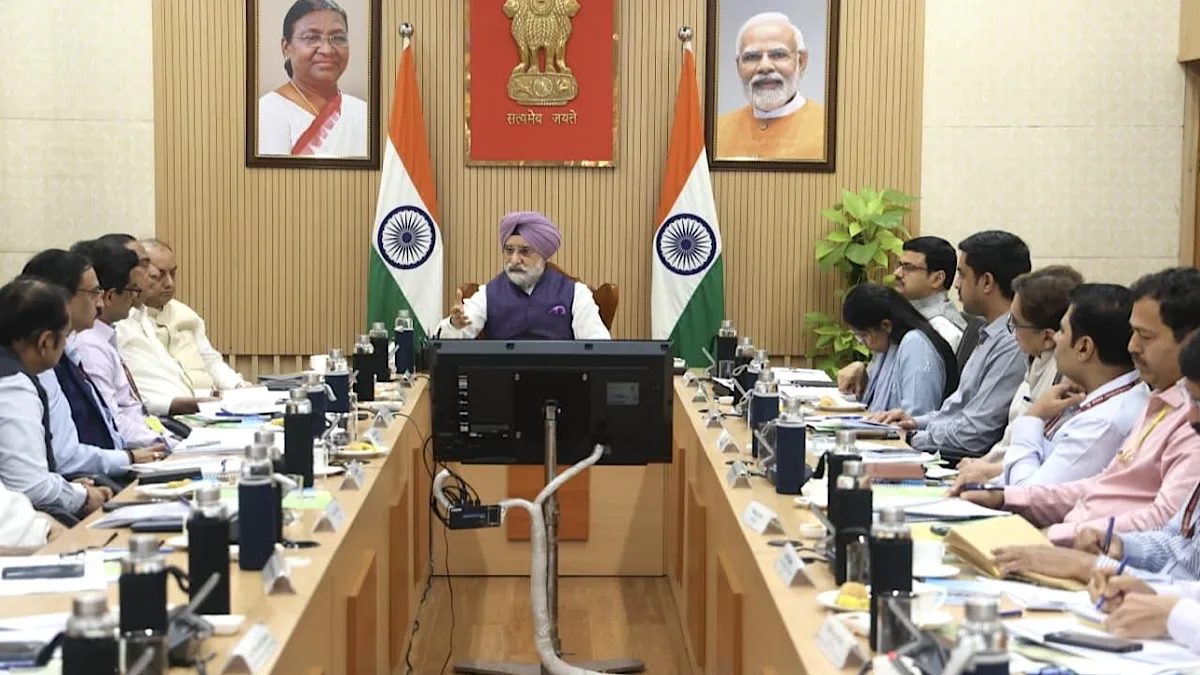
The Delhi Development Authority’s Advisory Council, in a meeting chaired by Lieutenant Governor Taranjit Sandhu, took stock of the challenges confronting the national capital’s urban landscape, including housing shortages, traffic congestion, water security, and other issues.
According to officials present at the meeting, the LG emphasised that the city’s growth must be sustainable, inclusive, and future-ready so that citizens can enjoy a better quality of life and uniform development.
Advertisement
Taking note of the challenges, the LG outlined a vision for a developed Delhi to ensure that the national capital becomes an environmentally sustainable and inclusive city offering a good quality of life, along with economic vibrancy.
Gaps in the demand and supply of affordable housing, the proliferation of slums and JJ clusters and their relocation/ rehabilitation, the regularisation and redevelopment of unauthorised colonies, traffic congestion and pollution, development and regulation in Zone O, urban flooding and urban heat islands, redevelopment of existing areas, planned development in land pooling and low-density areas, deterioration of heritage structures, and water shortage were among the factors taken into account as the LG and the council outlined the way forward.
The focus will be on achieving the highest per capita green cover, vibrant riverfront development, and an interconnected green-and-blue infrastructure network when it comes to environmental sustainability.
To ensure quality living, the emphasis will be on disaster resilience, water security, and safer roads for all.
On strengthening Delhi’s economic and cultural identity, the plan envisages reviving business and trade through the development and redevelopment of commercial markets and centres, the creation of logistics hubs, and leveraging heritage as an economic and cultural asset.
For developing a truly inclusive city, the LG stressed the need for comprehensive mobility through a congestion-free city, multi-modal integration, and last-mile connectivity from Metro stations.
To operationalise this vision, the council was apprised of the key prescriptions charted for development across 1,400 square kilometres, including Transit-Oriented development covering 207 sq km, Land Pooling Areas covering 200 sq km, and Developed Residential Areas spanning 700 sq km.
Low-density areas account for 150 sq km, while Riverfront Development in Zone O spans 100 sq km.
Other key zones include the redevelopment of Old City across 24 sq km, the Bungalow Zone covering 31 sq km, and the High-Density Corridor spanning 20 sq km.
According to officials present at the meeting, the prescriptions aim to address the housing shortage, regulate growth in unauthorised colonies, decongest traffic, and secure water resources while protecting heritage.
Sandhu asserted that these interventions would serve as the roadmap to translate the vision of a Viksit Delhi into reality.